
Resource
What the Building an AI Scientist London Hackathon taught us about Tech x Bio
What we learned from 50 builders and what it taught us about building successfully in Tech x Bio.
Written by Alexander Junge, Co-founder and CTO of Amass.
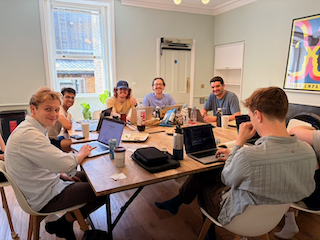
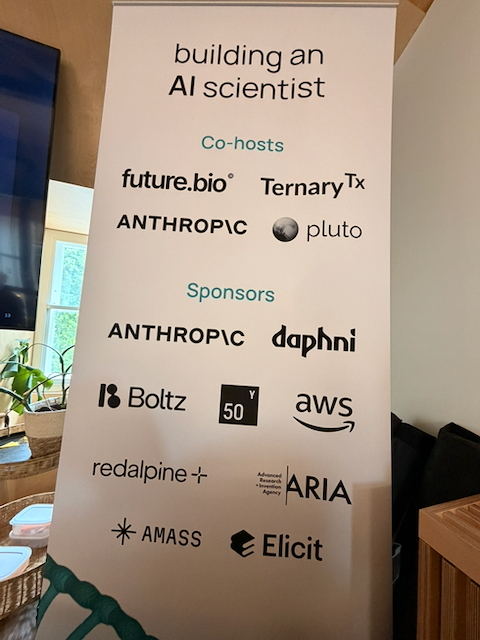
We were proud sponsors of the Building an AI Scientist hackathon (https://luma.com/yw0c3upd) from 3-5 July in London, co-hosted by TernaryTx, future.bio, Pluto House, and Anthropic. About 50 builders worked across Experimental data, Safety, Pre-clinical data, IP, Target id, Ligand models, and an Open track.
Over the hackathon weekend alone, we saw more than 11K Amass API requests across the teams. More than 4K requests went to GeneCore alone, multiple teams mentioned TrialCore in their demos, one linked similar trials based on protein similarity from Boltz predictions, others inferred druggability from our API.
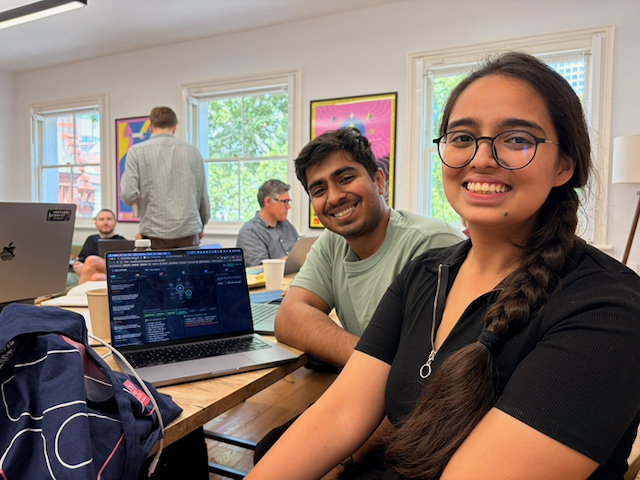
All of this comes just two months after our initial API release and we are excited where the future will take us. This post sums up a few key takeaways we noted while building:
Biological systems are complex on so many levels
The first thing a bio hackathon makes you feel is how many axes of complexity you're fighting at once. Biology is deep in scale — a single nucleotide, a protein fold, a pathway, a whole patient — and every layer carries its own data, its own failure modes, and its own experts. But it is also deep in time: a hypothesis that looks brilliant on the whiteboard still has to survive years of assays, models, and trials.
That is the humbling part of the domain. In pure software we choose speed. In bio, biology sets the clock which is exactly why the work you do before the clock starts (narrowing to the right target, the right modality, the right trial) matters so much more here than it does almost anywhere else.
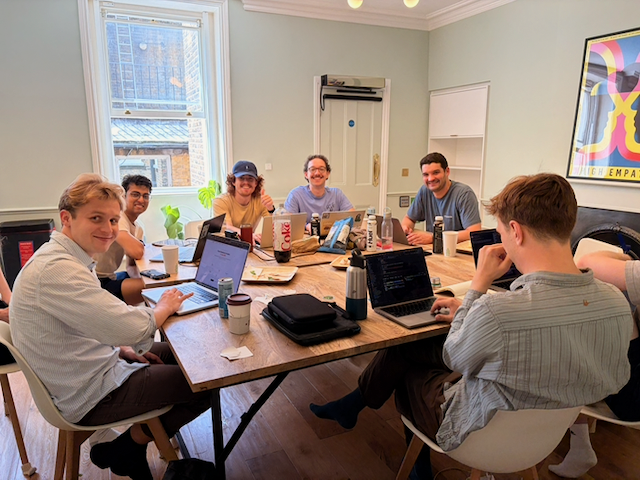
And it makes no difference whether you are a funded company or a weekend hackathon project: the requirements are the same. You need world-class bio and world-class tech, and one cannot stand in for the other. A beautiful predictive model pointed at the wrong biology is just a faster route to a wrong answer; deep biological insight trapped in a spreadsheet never scales. The teams that got furthest were the ones with both in the room. Those that did hours of data anaylsis in minutes, yet were able to sanity check every key result.
Tech needs to be the connective tissue
When technology has a chance to treat cancer in a child, or sepsis in a twenty-year-old, software cannot be an afterthought bolted on to the science. It has to be the connective tissue: the layer that moves data between the wet lab, the models, the literature, and the clinic without losing fidelity at every hop.
We need different engineering discipline than most people expect walking in. It is not a demo that works once on stage. It is systems that are scalable, reliable, observable, and evolvable and, when they sit inside a research or clinical loop, systems that simply must be up. Building those takes a kind of expertise that is easy to underestimate from the bio side and easy to trivialize from the tech side.
It is also the reason we built Amass the way we did. The teams reaching for GeneCore and TrialCore over the weekend were not asking for another model but for infrastructure they could trust: stable identifiers, cross-linked records, results that come back the same way every time. Only when the plumbing is dependable, the science on top of it is able to move fast.
Speed is all that matters; and you get nowhere without data
A hackathon compresses a startup into forty-eight hours, and it makes one thing VERY clear: speed is almost everything; and you get nowhere without data. What slows teams down is rarely ideas or ambition; it is the hours lost wiring up sources, reconciling identifiers, and cleaning data before any of the interesting work can start.
We prepared a dedicated starter page for each track — Experimental data, Safety, Pre-clinical, IP, Target ID, Ligand models, and the Open track — demoed our solution end to end, and sat with teams to unblock them.
You could see it pay off in what got built on top. Teams inferred druggability straight from the API, linked similar trials by protein similarity off Boltz predictions, and pulled TrialCore into their demos. None of which happens if you are still writing PubMed scrapers at hour thirty. That is the part people underestimate about tech x bio: the differentiator is not the model you call, it is how fast you can put the right evidence in front of it.
Summing up
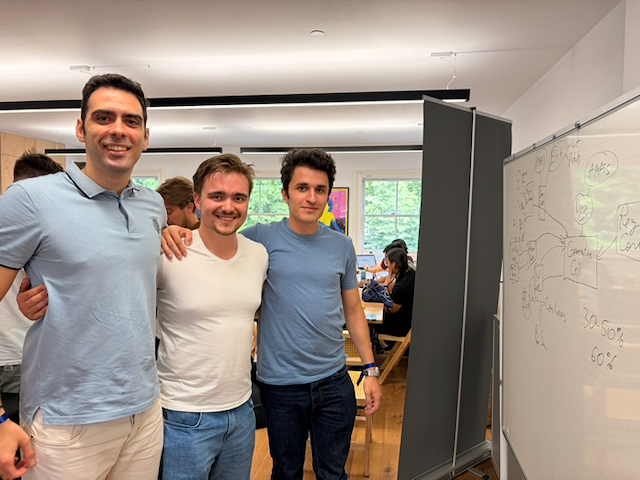
If there is one image we are taking home, it is the enthusiasm of fifty builders, one weekend, and a room that genuinely wanted to make biology move faster.
Building in tech x bio takes deep, deep expertise on both sides. AI is changing what is possible, especially in coding and knowledge work, where it is collapsing the cost of turning an idea into a working system, but it does not remove the need for real biology or real engineering. It raises the premium on having both on your team.
We can't wait to run more of these and to see what this community builds next. Reach out if you want to learn more or help us shape the future of Amass and our API by giving us feedback or asking the right questions:
Book a technical discussion