
Product
Introducing *Core: The Intelligence Architecture Behind Amass
All six external data sources are being renamed to a unified *Core naming convention — BioMedCore, ScholarCore, PatentCore, RegulatoryCore, TrialCore, and…
- Product
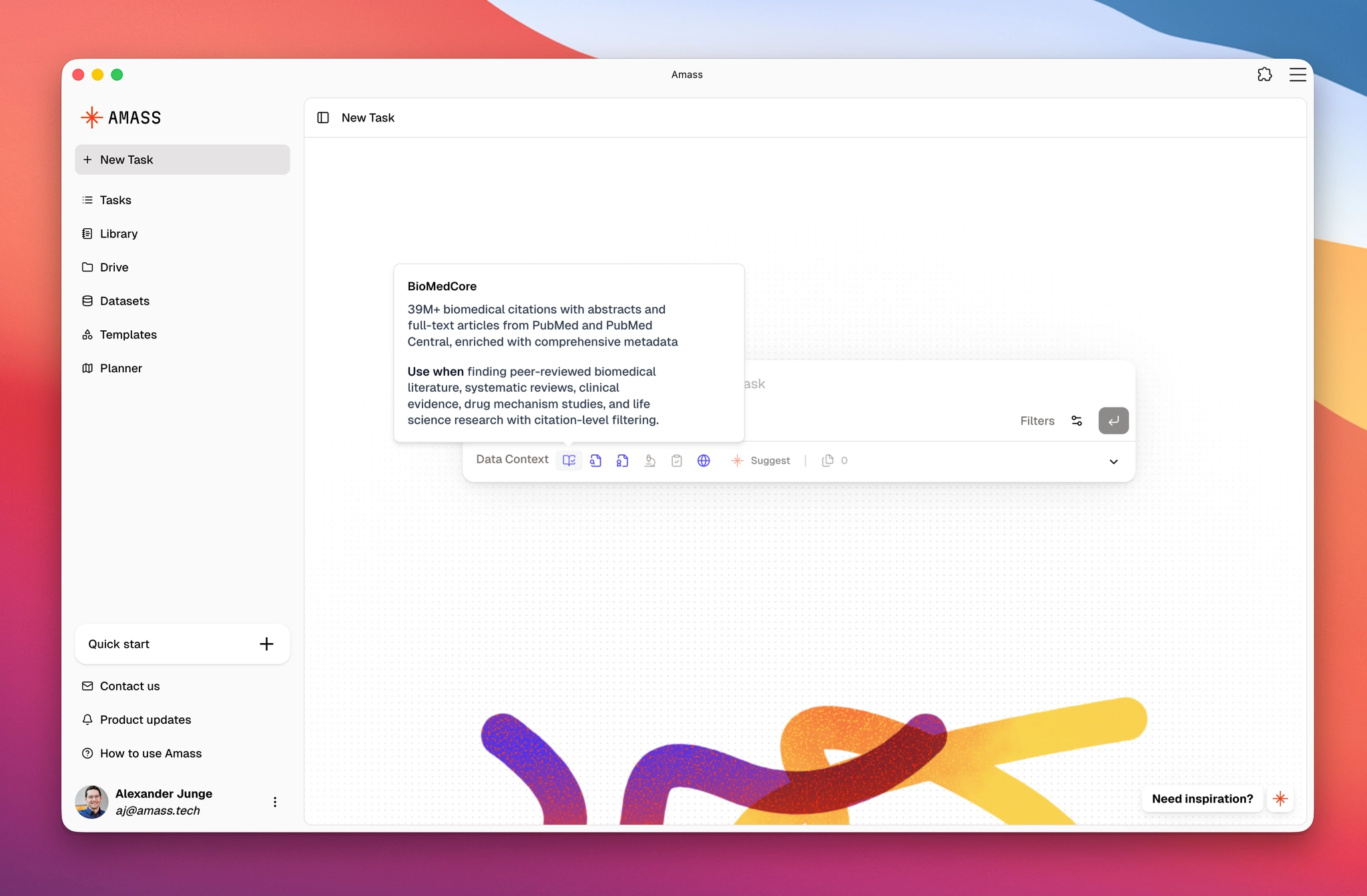
We are introducing *Core, a new naming framework for the six data sources that power the Amass platform.
It reflects an architectural representation of how knowledge is structured and accessed inside Amass.
Each dataset is treated as its own *Core - a dedicated intelligence layer treating each data source as a specialized agent within the Amass platform. Instead of a collection of data feeds, the platform now operates through *specialized cores, each responsible for a distinct domain of scientific evidence.
The result is a clearer model of how Amass works internally:
- a system where multiple *cores continuously process and structure the world’s scientific information into a unified intelligence layer.
In practice, this makes the platform easier to reason about, easier to extend, and far more powerful as new sources and capabilities are added.
*Core is a modular and agentic architecture for Amass - one where each domain of knowledge becomes an intelligent component of the system.
Why *Core
- Unified name — A consistent naming convention makes it easier to reference and communicate about data sources.
- Reflects the agentic nature — Each data source is powered by intelligent retrieval and synthesis. The _Core names signal that these are active agents, not static databases. Under the GEMA architecture behind Amass, users build teams of *_Core agents tailored to each task.
- Easier to reference — Names like BioMedCore and PatentCore are immediately descriptive and memorable in conversations within your team.
Meet the *Core agents
BioMedCore
39M+ biomedical citations with abstracts and full-text articles from PubMed and PubMed Central, enriched with comprehensive metadata including citation counts and journal quality indicators.
Ideal for: Peer-reviewed biomedical literature, systematic reviews, clinical evidence, and drug mechanism studies.
ScholarCore
233M+ research abstracts, conference publications, and preprints across all scholarly fields via Semantic Scholar. Provides broad cross-disciplinary coverage beyond biomedicine.
Ideal for: Interdisciplinary literature reviews, technology landscape analysis, and finding preprints and conference papers.
PatentCore
170M+ patent documents from global patent offices including USPTO, EPO, and WIPO, sourced via lens.org. Covers patent claims, abstracts, assignee information, and citation networks.
Ideal for: Prior art searches, competitive IP analysis, innovation trend monitoring, and freedom-to-operate assessments.
RegulatoryCore
Regulatory review documents for approved drugs from the FDA and EMA, including medical reviews, pharmacology reviews, EPARs, and prescribing information.
Ideal for: Regulatory approval histories, agency review rationale, drug safety profiles, and pivotal trial assessments.
TrialCore
575K+ clinical trial records from ClinicalTrials.gov with AI-powered search, enriched with PubChem metadata and synonyms. Covers all phases of clinical research.
Ideal for: Finding trials by indication, sponsor, or phase; competitive landscape analysis; and tracking recruitment status.
WebCore
AI-powered web search agent that finds real-time information from news, company sites, press releases, and the open web. Not a static dataset but an active agent retrieving live information
Ideal for: Current events, company profiles, market trends, funding news, and general knowledge not yet captured in research databases.