Customer
From cycle tracking to action: how Gina won its track in Vienna
Solo founder PJ Vang won the Applied AI for You track at HACK_002 in Vienna with Gina, a cycle app whose agents rank symptom relief by published evidence.
- Customer
- API
- Use Case
From cycle tracking to action
A woman who tracks her cycle can already see which phase she is in and how her hormones are shifting. What most apps cannot tell her is what to do about the cramps, the low energy or the mood change she logged that morning.
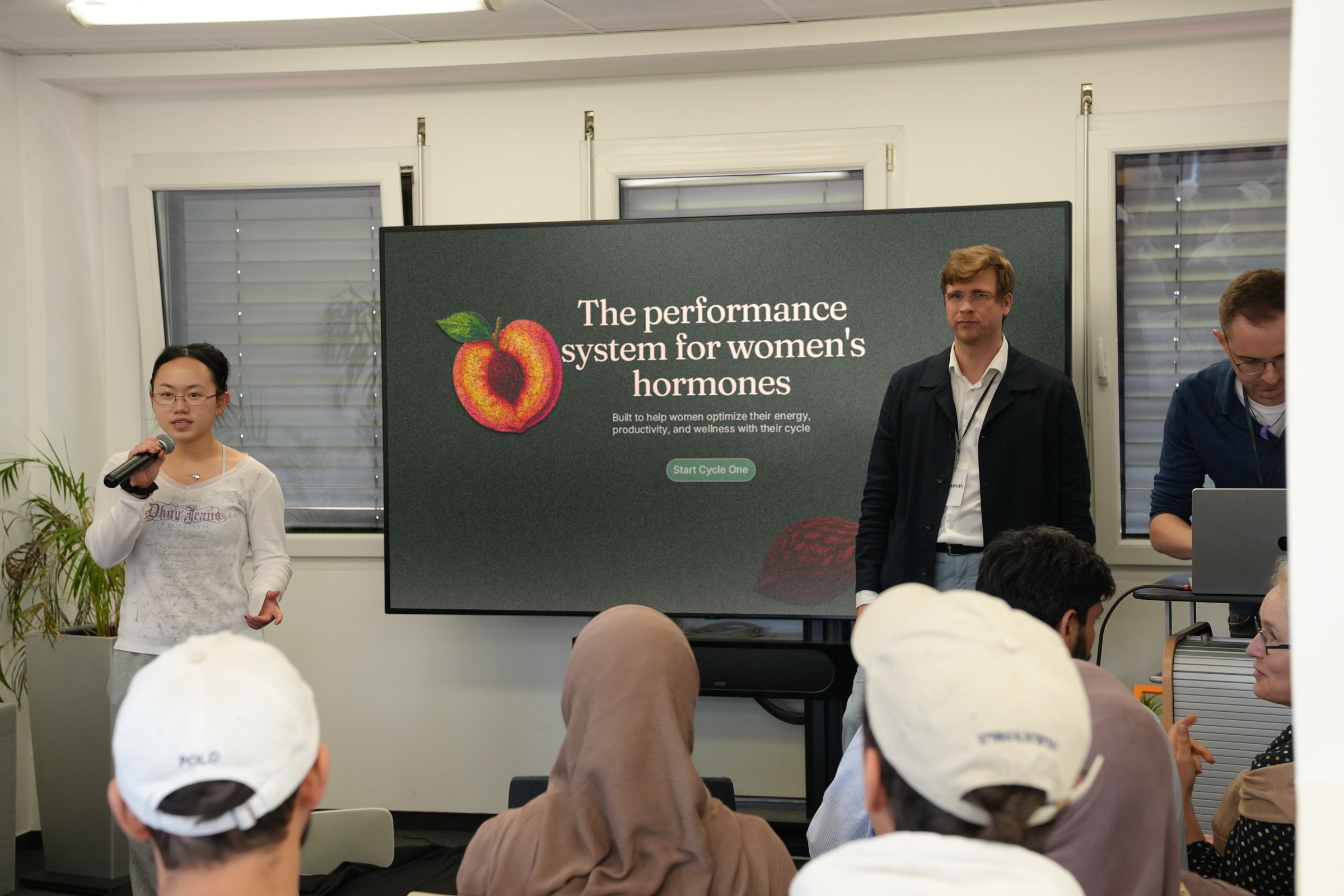
At HACK_002: Signal From Tomorrow in Vienna, 65 builders in 25 teams had 19.5 hours overnight to ship a working prototype. Gina, built by solo founder PJ Vang as team pJacked, won track A2, Applied AI for You, with a research agent that runs on the Amass API.
We sat down with PJ about a week later to hear how it works.
The problem PJ picked
Gina already models and tracks a woman's hormonal cycle. PJ came to the hackathon with one question about what comes after the tracking.
"If a woman is already tracking her cycle and she already knows what phase she's in and how her hormones are shifting across her cycle, what can she actually do to help manage the symptoms that she's currently experiencing?"
PJ Vang, Gina
PJ described what women hear today when they ask about these symptoms.
"Over 90% of women experience hormone-related symptoms that influence their mood, their energy, and their life and work in some way. [...] It could be 20 different reasons why you're experiencing this symptom. Oftentimes the result a woman ends up with is she's just told to take better care of her health, to eat cleaner, to exercise more. Those aren't really solutions that actually target the symptoms that she's experiencing."
PJ Vang, Gina
The goal for the weekend was a system that turns tracking into action a woman can fit into her day.
The builder
PJ studied at Stanford, graduated two years ago and worked at a startup before going full-time on Gina at the start of 2026. PJ builds Gina alone and is currently based in Vienna with The Residency, a global founder accelerator.
Gina has been on the App Store for about three months and has passed 600 downloads. Its predictions come from the user's own cycle patterns, it needs no wearable, and her data never leaves her phone. It is built for natural cycles, regular or irregular, including women with PMDD or recurring physical and emotional cycle symptoms. It is not a tool for contraception or medical diagnosis.

How it works
The hackathon build sits on top of the existing app, so it starts with context a general chatbot does not have. Gina already knows the user's current phase, her hormonal state, the symptoms she has logged and the shifts in mood and energy she has recorded.
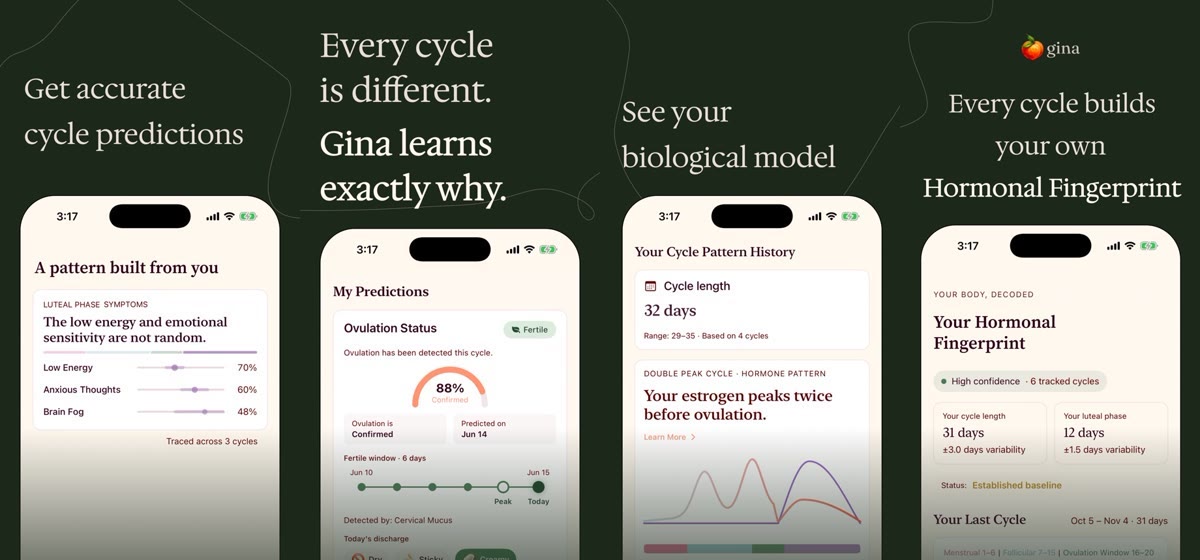
PJ added two agents behind a chat interface.
The research agent combines that context with the issue she describes in the chat and retrieves the biomedical evidence that bears on it. It returns the hormone-related issues that could explain what she is feeling, so she can read about each one and judge whether it fits her.
The scheduling agent takes over once she has settled on the most likely cause, and it works on two timescales. For relief now, it ranks the options and returns the three with the best evidence. For menstrual cramps, that means the three most effective practices she can try that day. For her next cycle it builds a plan, since a hormonal symptom usually comes back. She selects what she has access to, such as a magnesium supplement, salmon in her diet or time for yoga. The agent then turns those options into what PJ calls "a smaller version of a protocol."
Where Amass came in
PJ had not heard of Amass before the hackathon but had always wanted an evidence layer in Gina. General-purpose language models were the obstacle.
"A lot of it isn't rooted in research. They kind of just generalize everything that's online, and oftentimes the result can just be random things that they think a woman wants to hear. [...] What I really liked about Amass was that everything is rooted in science and in research and in clinical trials. For a hormonal health app for women, we do not want any information that's not rooted in science, or where there's no evidence supporting the interventions and the output."
PJ Vang, Gina
The citations mattered to PJ as much as the content.
"I love all the citations and how everything is very clearly backed. It just feels a lot more trustworthy, which is really aligned with what we're trying to build."
PJ Vang, Gina
The use PJ did not expect
PJ came in expecting a retrieval API that returns evidence on request. The part that mattered most turned out to be ranking.
"There are like 30 different proven ways to help manage cramps, but what are the top three to five ways for this specific woman to actually help her resolve her symptoms?"
PJ Vang, Gina
The ranking depends on the detail attached to each study. PJ pointed to four details: who was in the study population, how effective the intervention was, what outcome was measured and the level of evidence. With those, the agent can narrow dozens of candidate interventions to the three that fit one user.
"I really liked that the Amass structure provides the population, what sort of people were included in the study, how effective it was, and the outcome and the levels of evidence that were a part of every study. That was really helpful and important in being able to categorize: these are the top three interventions that would make the most sense for this specific user."
PJ Vang, Gina
What PJ is building next
The hackathon produced the prototype and showed what the feature could look like. PJ is still building on Amass and is now working out how to turn the research and scheduling layer into a feature that ships to every Gina user.
The other job is distribution. PJ comes from engineering and is learning go-to-market through founder content, which PJ calls a fun challenge.
"I'm super happy to be working in the women's health space. I think there's a lot of improvements that need to be made, and I'm very thankful that I can contribute to the space."
PJ Vang, Gina
You can find Gina at ginacycle.com and on the App Store.
About the hackathon
HACK_002: Signal From Tomorrow ran overnight on 26 and 27 September 2026 at HOIV (Home of Innovation), Arsenalstraße 11, in Vienna. It was organised by Telos Circle, a Vienna nonprofit that brings builders, researchers and founders together around hard technical problems. 65 builders in 25 teams shipped 25 projects in a 19.5-hour build window, split across two blocks, Useful AI Systems and AI Advances Science.
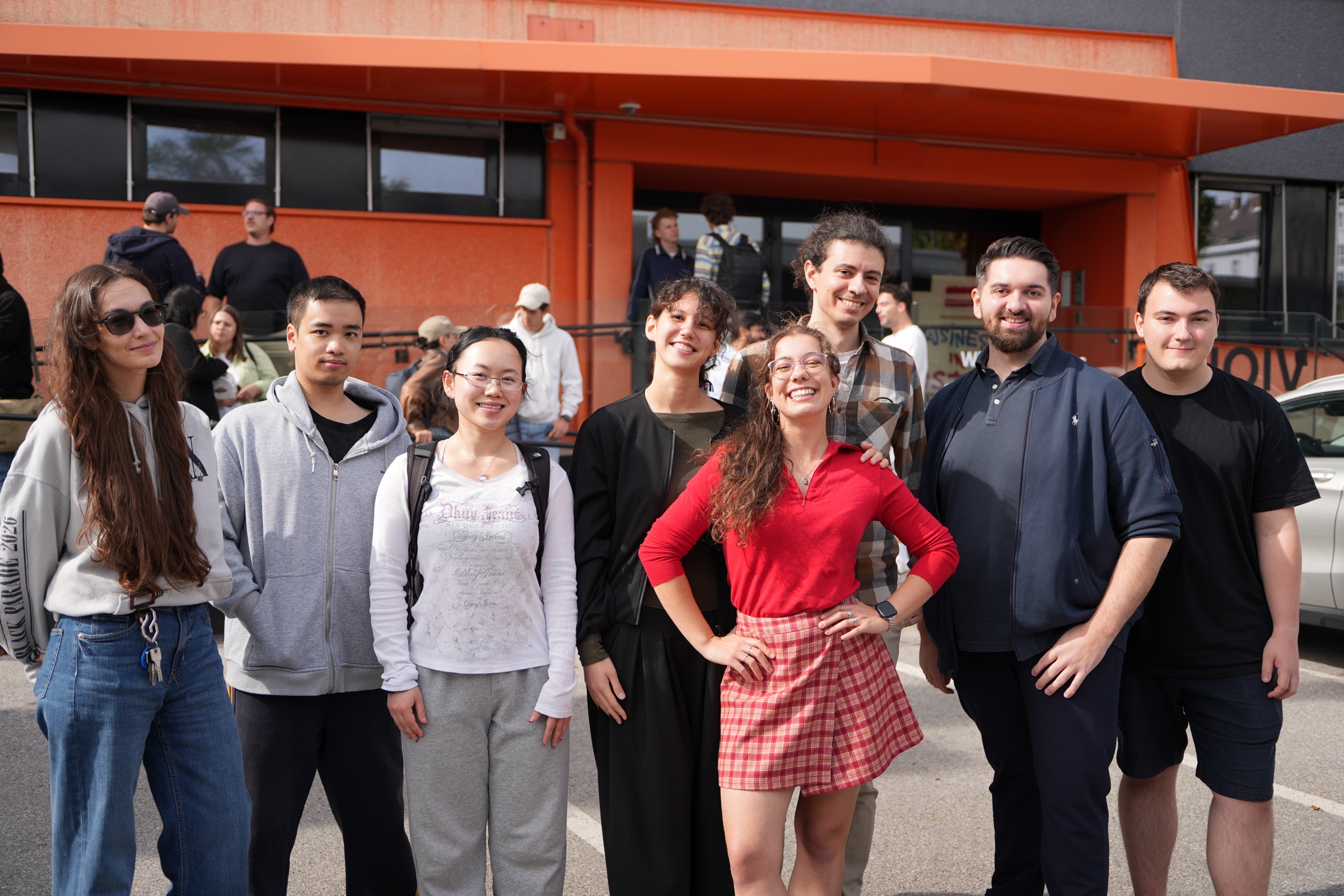
Sponsors and partners included HOIV, The Residency Vienna, Lovable, ElevenLabs, Project Europe, OFI Oxbridge Frontier Intelligence, AIM, RISE, Eutema Research Services, Maritime, Proximata, Texterous and Amass.
If you are building agents that need biomedical evidence underneath them, tell us what you are working on.
Book a technical discussion