
Use Case
The right pill at the right time: how LockedIn won the Stockholm hackathon
Team LockedIn won the Stockholm Longevity × AI Hackathon with Pillot, a voice-guided medication companion that backs family questions with research via Amass.
- Use Case
- API
Team LockedIn won the Stockholm Longevity × AI Hackathon in September with Pillot, an AI companion that makes sure the right person takes the right medicine at the right time. A voice guide walks the patient through each dose and checks the package in their hand before they take anything. Relatives follow along on a dashboard and can ask questions about each medicine, and the answers link to published research retrieved through Amass.
We spoke to two of the four team members, Julia Anna Kent and Alexander Jegorov, about what they built in 36 hours. Julia and Alexander are now exploring how to take Pillot further after the hackathon. You can also watch the demo.
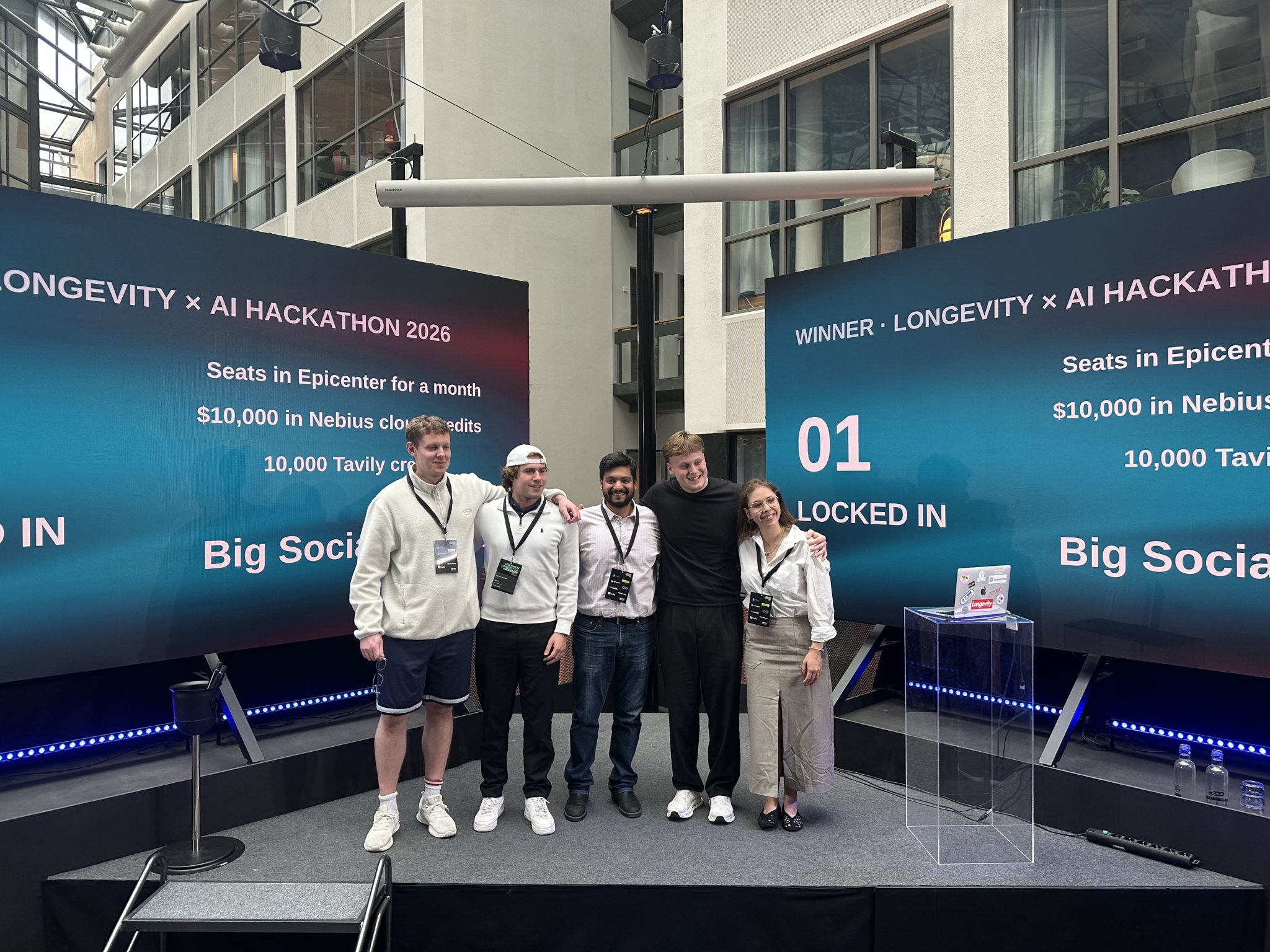
The team
Julia, Alexander, Mateusz Winiarek and Antoni Kwiatek met on the first day of the hackathon and formed a team there. Mateusz came up with the original concept, and Julia, who is a medical doctor, checked from the clinical side that the problem was real.
The problem they picked
Julia describes the need they set out to meet.
"Our main problem was that people, especially old people, forget to take their medication, or they don't know which medication they have to take, or they take the wrong medication. So we built this reminder so that they take the right medication at the right time, and it checks that they took it."
Julia Anna Kent, LockedIn
The team's user research showed what medication mistakes look like at home. People depended on family members to remind them, confused one medicine package with another, and organised their pills at home with systems they had improvised themselves.
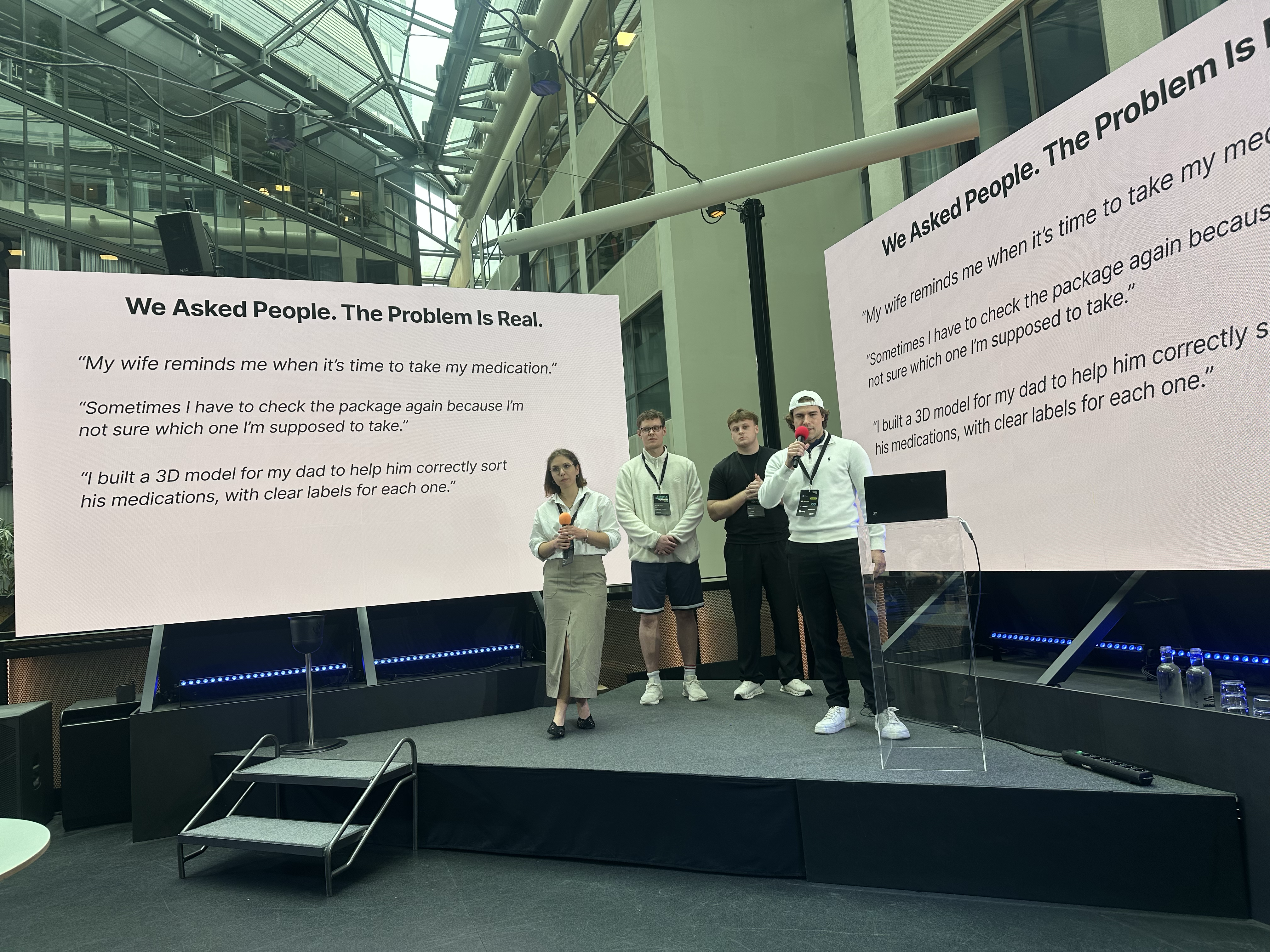
The team then found that the same problem runs through drug development. Alexander pointed out that participants in clinical trials do not always take the medicine they agreed to take, and Julia spelled out what missed doses cost a trial.
"If you want to test the drug and the participants of the trial don't take the drug, then it's a problem."
Julia Anna Kent, LockedIn
How Pillot works
The patient uses Pillot by voice: the guide asks them to hold up their medicine and then reads the label. If the package is correct, the guide says how many pills to take and asks to see them. It then waits for the patient to confirm they have swallowed the dose. If the package is wrong, the guide stops the patient and alerts their caretaker. Alexander sees the voice design as a good fit for older people whose eyesight is poor or who are a bit forgetful.
The second half of Pillot is a dashboard for relatives. Time on stage was short, so the team showed it only briefly.
"If you're a relative of an old person that is using the application and you want to check that your grandpa takes the medication that he's supposed to, there is a feature where you can check that. You can also ask questions, for example what is this medication for, what are some side effects. And it gives you evidence-based answers."
Julia Anna Kent, LockedIn
Where Amass came in
Pillot uses three sources, each for a different question.
| Source | What it answered |
|---|---|
| RxNorm | Which medicine is this? It gave each drug a standard identity. |
| openFDA | What does the label say? |
| Amass BiomedCore | What does the published research say about this medicine? |
The backend queried BiomedCore by medicine name and by the interaction question a relative had asked. It filtered and deduplicated the papers that came back, then showed the source links inside the family briefing and inside the conversation about each medication. A relative who asks about side effects can open the papers behind the answer.
Alexander put the value of the source links in personal terms.
"It's like a safety layer within the software, and that makes me more confident if I would, for example, let my mother use the software if she's taking medication."
Alexander Jegorov, LockedIn
About the hackathon
The Stockholm Longevity × AI Hackathon ran from 11 to 13 September 2026 at Epicenter Stockholm, a 36-hour build during Nordic Tech Week. Oxbridge Frontier Intelligence and the Swedish Longevity Cluster organised it, Nebius was the headline sponsor, and Amass joined Tavily and ElevenLabs as a tooling partner.
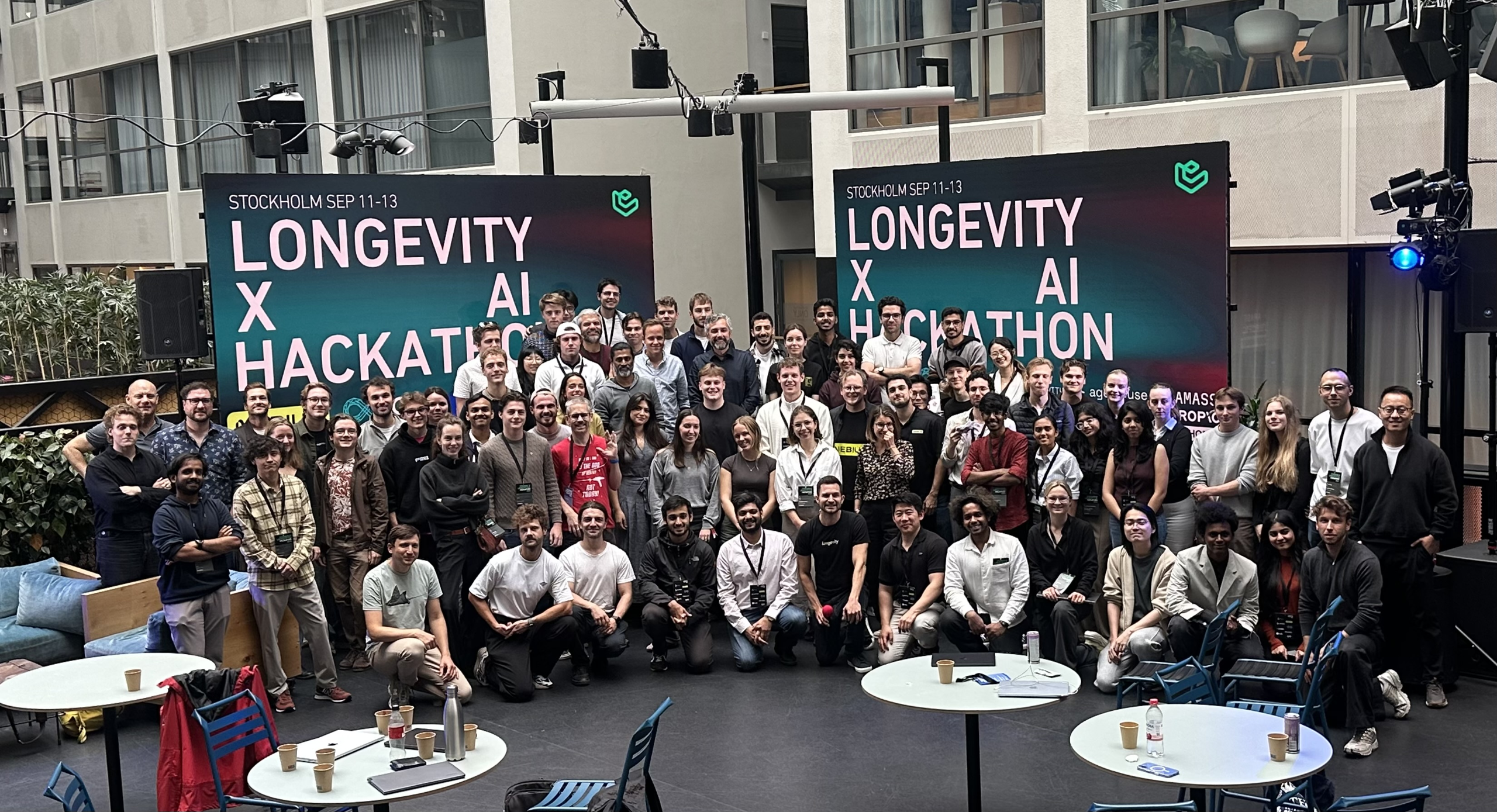
Every team received $500 in Amass API credits. The other winning teams are in our recap of the weekend.
Thank you to Julia, Alexander, Mateusz and Antoni for the build and for the conversation.
If you are building something where an answer needs a source behind it, talk to our engineers:
Book a technical discussionPhotos: Tanmay