
Resource
Text2WetLab and Trial at the London AI x Science Hackathon
On 3 and 4 October, 259 hackers met at the London AI x Science Hackathon. 53 teams, 50 projects and four tracks What Text2WetLab and Trial built in 48 hours
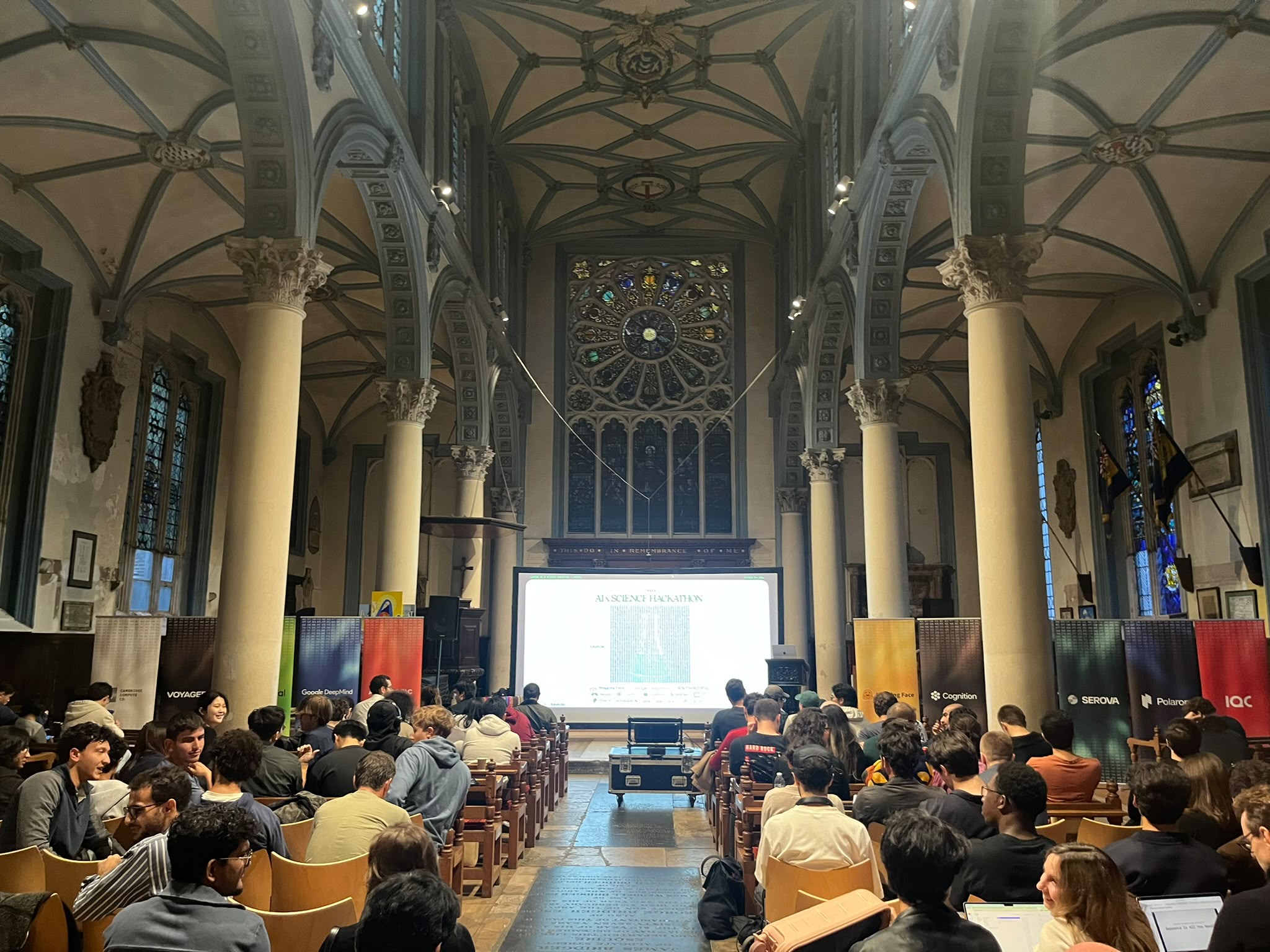
Written by Caroline, Event and GTM at Amass.
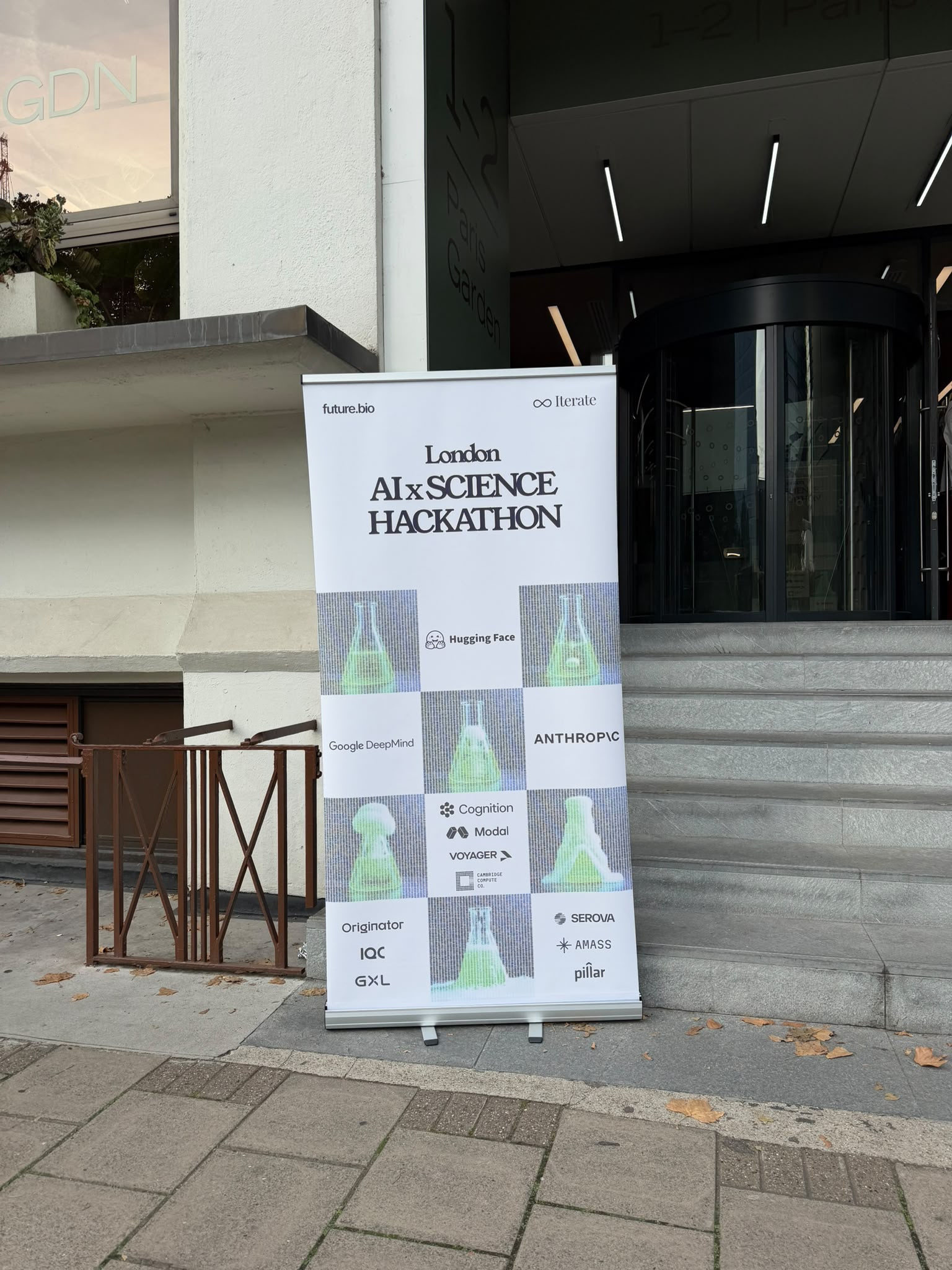
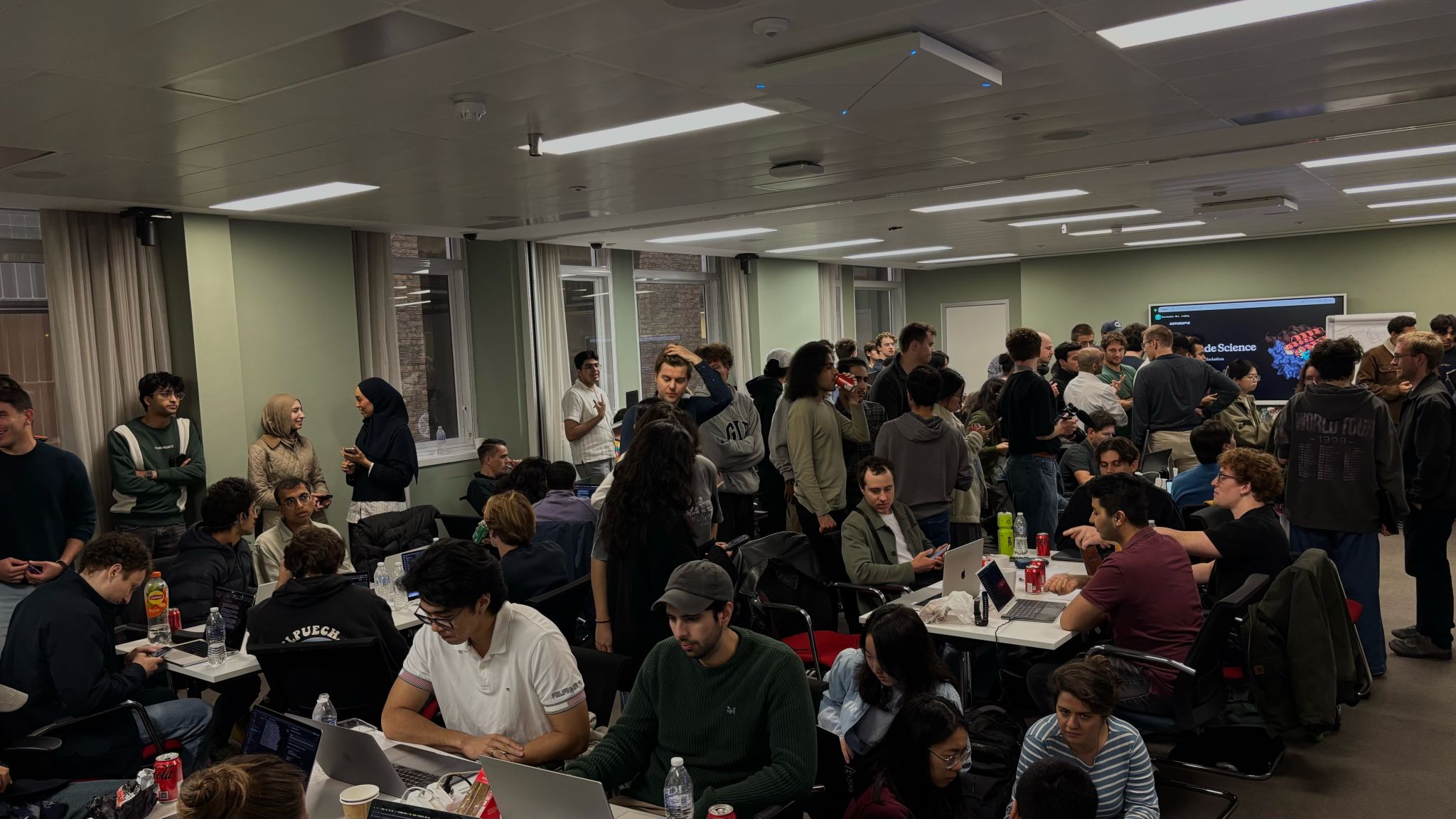
On 3 and 4 October, 259 hackers from 10 countries spent 48 hours at the London AI x Science Hackathon, which Iterate and future.bio organized to open London Deep Tech Week. Iterate picked them from more than 1,000 applications. They worked in 53 teams at 1-2 Paris Garden in Southwark, and on Sunday evening they demoed 50 projects in a church in central London.
The four tracks were open maths problems (set by Cambridge Compute Co), agents that do science and know when they are wrong (Originator), protein engineering (Serova) and materials manufacturing (Polaron). Amass was one of 15 sponsors. Alexander Junge, our co-founder and CTO, sat on the judging panel, and he and I spent both days with the teams.
Text2WetLab
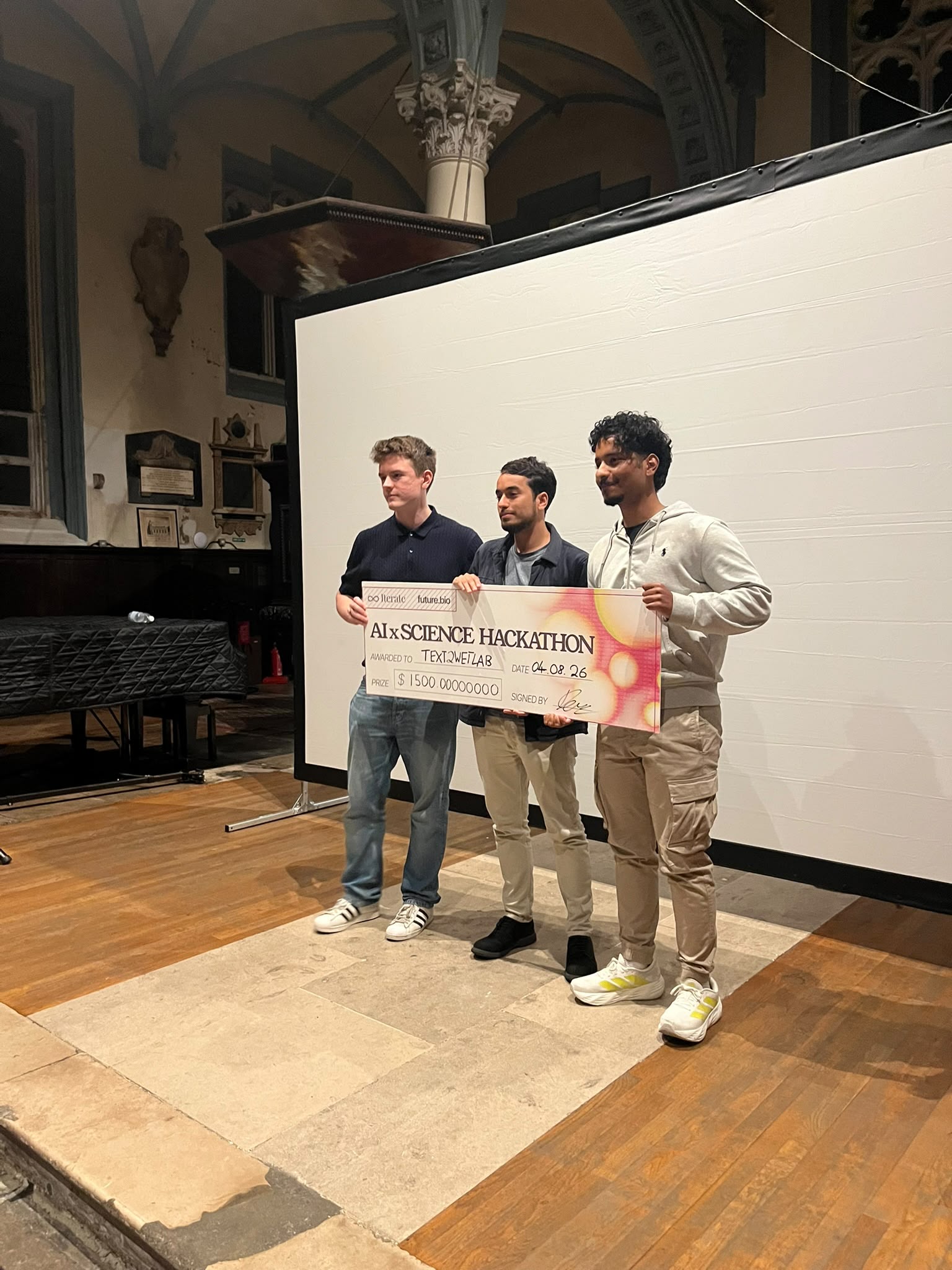
Evan O'Leary, Laurence Legon and Mo Alshehri, team The Reproducibility Crisis, took first place and the $1,500 grand prize with Text2WetLab, in the agents track. It is a benchmark that asks whether a language model can turn a published protocol into code that runs lab hardware. The team built seven tasks from bioRxiv papers and the code their authors wrote and tested to run the experiments, and held that code back as the answer key. They built it because once models write the code that runs experiments, a small error rate repeats across every run.
Since the weekend the benchmark has grown to 11 tasks, outside contributors have joined, and its code is open on GitHub. Our interview with Evan and Laurence covers how the grading works and what the team wants help with.
Trial
Trial is a research agent that has to show its work. Dami Ogunleye, Mikhail Rudchenko and Omar Sayed from UCL and Charlie Piper from the University of York built it in the same track. All four are final-year students who use research agents for their dissertations, and they had seen those agents state conclusions with more confidence than their search allowed. In Trial, every claim points to the passage it came from, an independent model checks the cited evidence before the agent answers, and the agent may only be as certain as that evidence allows.
The team has kept working on Trial, and you can try it. Our interview with the team covers how they tested it.
Thank you to Iterate and future.bio for running the weekend, to the judges and mentors, and to all 53 teams.
If you are building agents on biomedical evidence, or want to tell us what we should build next, talk to our engineers:
Book a technical discussionPhotos: Iterate.